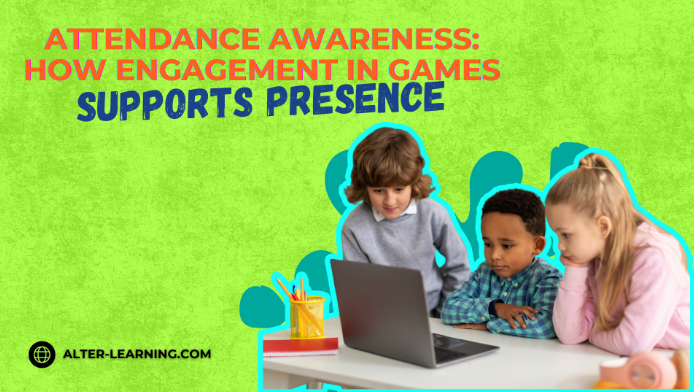
Chronic absenteeism has become a growing concern for schools. When students miss class regularly, they risk falling behind academically, socially, and emotionally. But addressing attendance isn’t just about enforcing rules—it’s also about making school a place where students want to be.
One promising approach is the integration of educational games and immersive technology into the learning experience. VR education apps, interactive STEAM learning tools, and collaborative game-based activities can provide the kind of engagement that encourages students to show up, stay involved, and feel connected. Alter-Learning’s model demonstrates how immersive environments can help shift attendance from obligation to opportunity.
The Link Between Engagement and Attendance
Students are more likely to attend when they know the classroom offers something meaningful, enjoyable, and interactive. Educational games can support this by:
- Turning abstract lessons into interactive simulations,
- Offering choice-driven narratives that give learners ownership,
- Encouraging collaboration in multiplayer missions,
- Providing immediate feedback that keeps students motivated.
When school feels like a space for discovery rather than routine, attendance can improve naturally.
One of the overlooked aspects of absenteeism is the social factor. Learners who don’t feel connected to their peers or teachers may disengage. Game-based learning can help create stronger bonds by:
- Using cooperative challenges where success depends on teamwork,
- Encouraging peer mentoring within digital environments,
- Providing safe spaces, like wellness-focused games, that emphasize emotional growth,
- Allowing every student, regardless of skill level, to contribute in meaningful ways.
These shared experiences can build community, reducing isolation and increasing the sense that showing up matters.
Practical Strategies for Schools
Educators looking to connect games with attendance awareness can consider:
- Integrating games into core subjects so that missing class means missing unique, interactive experiences,
- Using game-based assessments as incentives, where learners look forward to demonstrating mastery through play,
- Creating multiplayer sessions that require cooperation, reinforcing that every student’s presence impacts the group,
- Linking attendance campaigns with digital rewards or recognition tied to classroom games.
These strategies can help reframe school as a place of excitement and community.
Making Games Accessible for All Learners
Of course, engagement only supports attendance if games are accessible. That means ensuring:
- Options for low-tech devices as well as high-end VR setups,
- Difficulty settings that adapt to learners’ abilities,
- Features such as audio cues or colorblind-friendly design,
- Inclusive content that reflects diverse backgrounds and perspectives.
By removing barriers, schools can ensure all students benefit equally from game-based engagement.
The Ripple Effect Beyond Attendance
When students attend more regularly because they are engaged, the benefits extend beyond presence. Improved attendance can lead to:
- Stronger academic outcomes,
- Better social-emotional development,
- Increased confidence in tackling challenges,
- A deeper connection between school, peers, and teachers.
Through STEAM educational games, AR biology exploration, VR math games, and creative arts education software, students may discover that learning can be both fun and meaningful.
From Showing Up to Thriving
Attendance awareness is not just about counting days in class—it is about ensuring every student feels motivated to be part of the learning journey. By making classrooms dynamic, immersive, and socially connected, game-based learning can help transform attendance into engagement.
Alter-Learning’s emphasis on interactive STEAM learning, XR educational content, and immersive learning environments shows how technology can support not only academic goals but also the foundational habit of showing up.
Because when students feel that their presence matters, they don’t just attend school—they thrive in it.
Follow Alter-Learning for more insights into immersive education, edtech success stories, and the future of learning. Want to explore how VR/AR could transform your school or learning platform? Let’s connect.