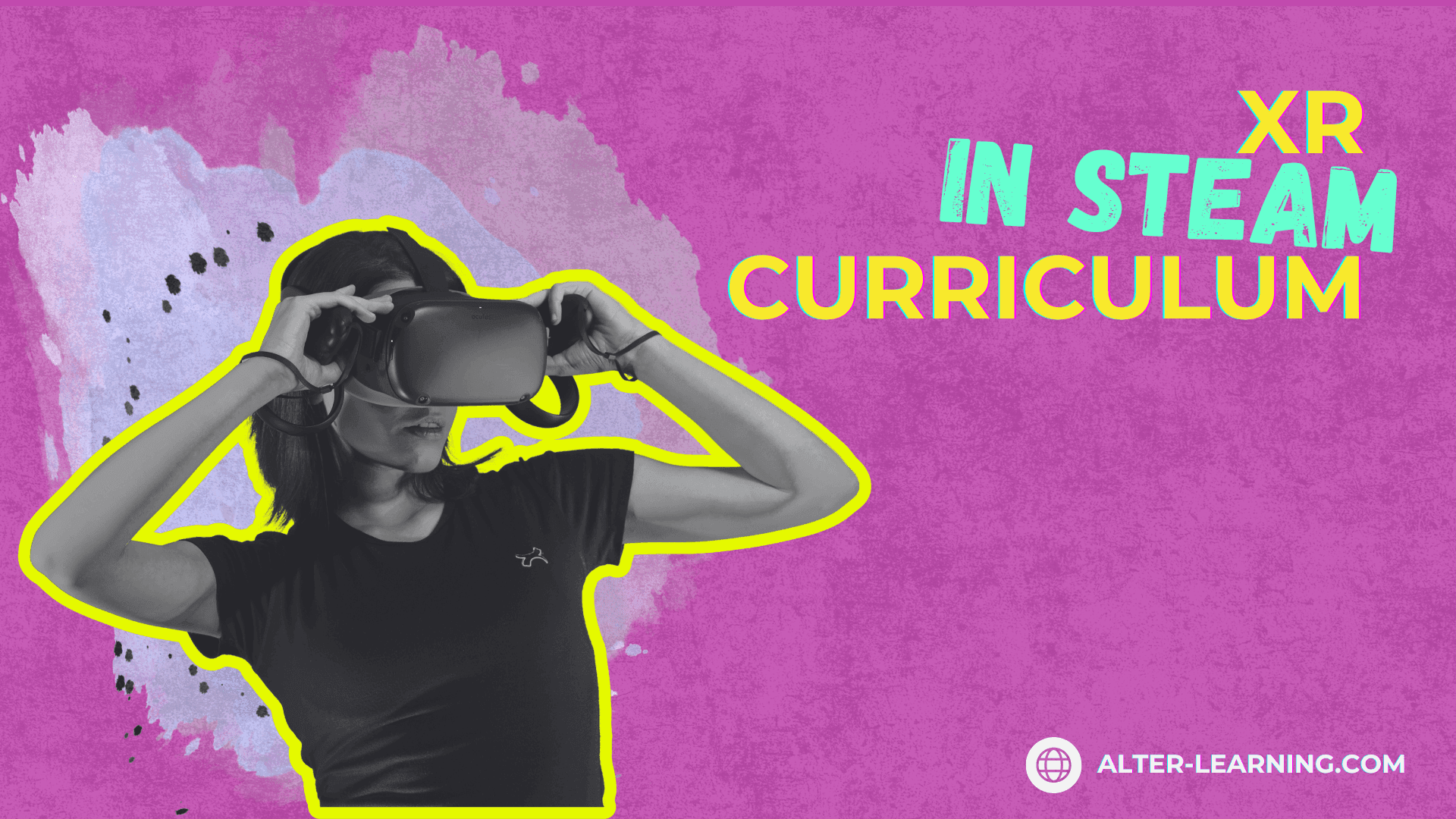
As classrooms evolve and learning needs diversify, the question is no longer whether technology belongs in education — it’s how that technology can be designed to include everyone. XR (extended reality), which blends virtual, augmented, and mixed reality environments, offers a promising path forward.
With the right design choices, these tools can support more equitable access to quality learning experiences. Alter-Learning is the platform exploring how XR can become more inclusive, adaptable, and impactful for a wide range of students and educators.
What XR Can Offer to Education
Extended reality technology creates a space where learners are not just observers but participants. They can build, test, and explore concepts firsthand. While this alone can make learning more engaging, it also introduces possibilities for differentiated instruction — allowing students to move at their own pace, revisit concepts, or approach material through different modalities.
Through:
- Interactive VR simulations that immerse students in scientific and mathematical problem-solving,
- AR biology exploration tools that bring ecosystems to life in the classroom or at home,
- Virtual environments where learners can explore history, music, or engineering in 3D space,
Students can engage with abstract or complex ideas in ways that suit their individual learning styles. For visual learners, kinesthetic thinkers, or students with attention challenges, this type of content can offer meaningful alternatives to traditional methods.
Designing for Accessibility and Inclusion
While XR is often associated with cutting-edge headsets and advanced systems, not every school or home has access to that level of technology. Alter-Learning’s platform can help bridge this gap by offering immersive experiences that also function on standard desktops and mobile devices.
Some design features that support broader inclusion include:
- Low hardware requirements, allowing even modest devices to run immersive lessons,
- Desktop and mobile compatibility, removing the VR-only barrier,
- Multiplayer options that enable collaborative learning without the need for advanced tech infrastructure,
- Sensory-aware environments created to accommodate neurodiverse learners, including those who benefit from quieter, more structured digital spaces.
This type of flexibility can make it easier for schools with limited resources to integrate immersive learning into their classrooms — and for families to support learning at home, regardless of device access.
How XR Can Support Diverse Learning Goals
Extended reality can be especially valuable in situations where traditional instruction may fall short. For example, learners with high-functioning autism may benefit from environments that offer structure, visual prompts, and a reduced sensory load. Students in remote or underfunded schools might gain exposure to experiences — like visiting an underwater ecosystem or performing a virtual science experiment — that wouldn’t otherwise be possible.
XR can also support skills beyond academics. Collaboration, resilience, and creativity often emerge in immersive environments that encourage exploration without fear of failure. When paired with strong instructional design, these experiences can become powerful tools for both cognitive and emotional development.
Follow Alter-Learning for more insights into immersive education, edtech success stories, and the future of learning. Want to explore how VR/AR could transform your school or learning platform? Let’s connect.