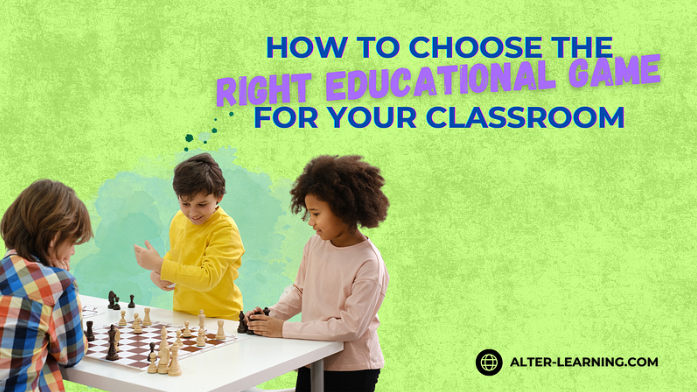
The rise of interactive educational games has opened new possibilities for engaging students, reinforcing lessons, and building essential skills. But with so many platforms and tools available, choosing the right educational game for your classroom can feel overwhelming.
The best choice isn’t always the flashiest or most complex—it’s the one that aligns with your learning objectives, supports your students’ needs, and complements your teaching style.
For educators looking to bring more interactive STEAM learning into their lessons, a few key factors can help guide the decision-making process – and Alter-Learning is here to give you a hand.
Start with Your Learning Goals
The first question isn’t “Which game is the most popular?” but “What do I want my students to learn?” Educational games that offer real value are designed with specific academic goals in mind, whether it’s mastering science concepts, building math fluency, or encouraging creative arts exploration.
Look for platforms that can support:
- STEAM-related learning, such as science games for kids, math puzzle games, or engineering challenges for students,
- Subject-specific focus, including AR biology exploration, VR coding tutorials, or virtual chemistry labs,
- Cross-curricular opportunities, where students connect learning across multiple subjects like music, technology, and science.
When the game’s structure reflects your instructional goals, it can reinforce—not replace—your lesson plans.
Every classroom is different. Age, learning styles, technology access, and student interests should all inform your decision. Immersive learning environments can be highly engaging, but only if they’re accessible to your students.
Evaluate how the game supports:
- Differentiated instruction, with adjustable difficulty levels or adaptive pacing,
- Accessibility features, such as colorblind modes, audio cues, or visual aids for diverse learners,
- Social-emotional growth, especially for students who may benefit from wellness-focused content or collaborative learning spaces,
- Technology compatibility, ensuring the game runs smoothly on your available devices—whether desktops, tablets, or VR headsets.
Choosing an educational game that meets students where they are can help promote equity and participation.
Look for Meaningful Interaction, Not Just Entertainment
Not all interactive games support meaningful learning. Effective educational platforms integrate engagement with critical thinking, collaboration, and problem-solving. Look for games where academic skills aren’t added on—they’re embedded into the gameplay.
Games that may offer deeper learning experiences often include:
- Interactive VR simulations that challenge students to apply knowledge in real-time scenarios,
- 3D geometry puzzles and interactive physics simulations that build logical reasoning,
- Creative arts education software that nurtures both artistic expression and cognitive skills,
- Collaborative environments that promote teamwork and communication.
By focusing on games that integrate content and mechanics, educators can help ensure the experience supports both engagement and academic growth.
Assess Teacher Tools and Support
An educational game is only as effective as its integration into your classroom. Look for platforms that provide tools to help you track student progress, guide instruction, and manage gameplay effectively.
Helpful teacher-facing features can include:
- Real-time dashboards that visualize student performance,
- Embedded assessments to measure comprehension,
- Curriculum alignment tools that map content to standards,
- Classroom management options for guiding multiplayer or co-op environments.
These features can help you use the game as part of a broader instructional strategy—not as a stand-alone activity.
Trial, Feedback, and Flexibility
Finally, consider piloting the game with a small group before full implementation. Observe how students interact with the content, collect feedback, and reflect on how it fits with your teaching style.
Bringing educational games into the classroom can enhance learning, spark curiosity, and support essential skills—but only if chosen with care. By aligning games to your goals, knowing your students, and seeking tools that integrate content with interactivity, you can make informed choices that elevate learning rather than complicate it. With thoughtful selection, educational games can help turn classrooms into spaces of discovery, collaboration, and confident problem-solving.
Follow Alter-Learning for more insights into immersive education, edtech success stories, and the future of learning. Want to explore how VR/AR could transform your school or learning platform? Let’s connect.